
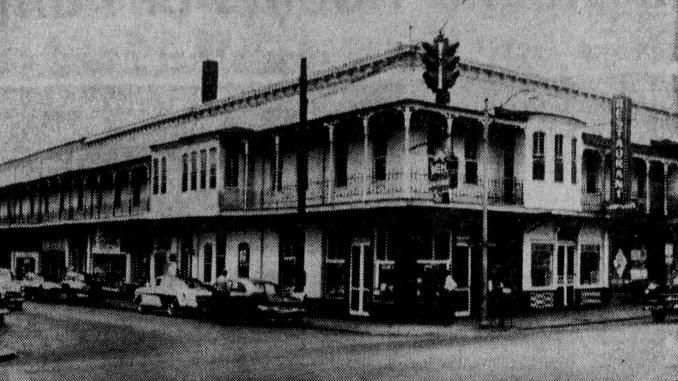
There are some buildings that disappear from a town and leave nothing but a bare patch of ground. And then there are others that linger long after the bricks are gone, like a ghost that still knows its way home. The old Belmont Hotel in Abingdon was one of those places. Even now, if you drive down Main Street and let your mind drift a little, you can almost see it standing there again, proud and tall, watching over the town like an old friend who never stopped paying attention.
The Belmont belonged to a different era, one when Abingdon was still finding its footing as a crossroads town. Travelers came by train, by wagon, and later by car, and the Belmont was waiting for them with its wide porch, its tall windows, and its promise of a warm bed. It wasn’t fancy in the way modern hotels try to be. It didn’t need marble floors or chrome fixtures. It had something better. It had character. It had stories. It had the kind of quiet dignity that comes from serving generations without ever trying to reinvent itself.
People used to say the Belmont had a way of making strangers feel like locals. Maybe it was the creak of the floorboards or the way the front desk clerk always seemed to know where you were coming from before you said a word. Maybe it was the smell of coffee drifting from the dining room in the morning, or the way the porch caught the afternoon light just right. Whatever it was, the Belmont made you feel like you were part of something, even if you were only passing through.
Old hotels like the Belmont had a rhythm to them. They collected stories the way trees collect rings. You can almost imagine the Belmont doing the same. Salesmen with worn suitcases. Families stopping on their way to Bristol or Wytheville. Railroad men grabbing a night’s rest before heading back out. Visiting actors from the Barter Theatre staying over after a long series of shows. Newlyweds. Widows. Dreamers. Drifters. The Belmont saw them all, and it held their footsteps in its halls like a memory pressed between pages.
And like so many old buildings, the Belmont eventually reached the end of its run. Time has a way of wearing down even the strongest foundations. New hotels came, travel changed, and the Belmont slowly faded from the daily life of Abingdon. When it finally came down, it felt like losing a piece of the town’s heartbeat. Not the loud part, not the part you hear in festivals or traffic or busy sidewalks. The quiet part. The part that hums underneath everything else.
But here’s the thing about places like the Belmont. They don’t really leave. They stay tucked into the corners of memory, into the stories people tell over supper, into the way older folks point and say, “Right there’s where the Belmont used to be.” They stay in the way the town feels, even if the building is gone. Abingdon is full of history, but the Belmont was one of those anchors that reminded people where they came from.
Sometimes I think towns are like people. They carry their past with them, even when they try to hide it. And the Belmont is part of Abingdon’s past that shouldn’t be forgotten. It reminds us of a time when travel was slower, when hospitality meant more than a key card and a continental breakfast, and when a porch and a warm smile could make a weary traveler feel at home.
If you stand on that spot today, you won’t hear the old screen door or the murmur of guests settling in for the night. But if you listen closely, you might hear something else. You might hear the echo of a town that once welcomed the world through the doors of a hotel that understood the simple truth that a place doesn’t have to be grand to matter. It just has to be loved.
And the Belmont was.
Discover more from Front Porch Philosophy
Subscribe to get the latest posts sent to your email.



Be the first to comment