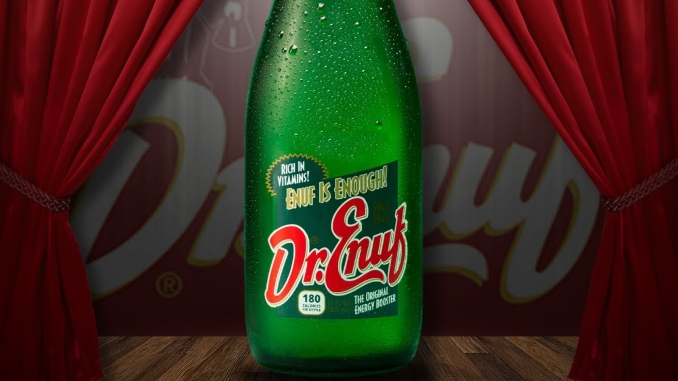
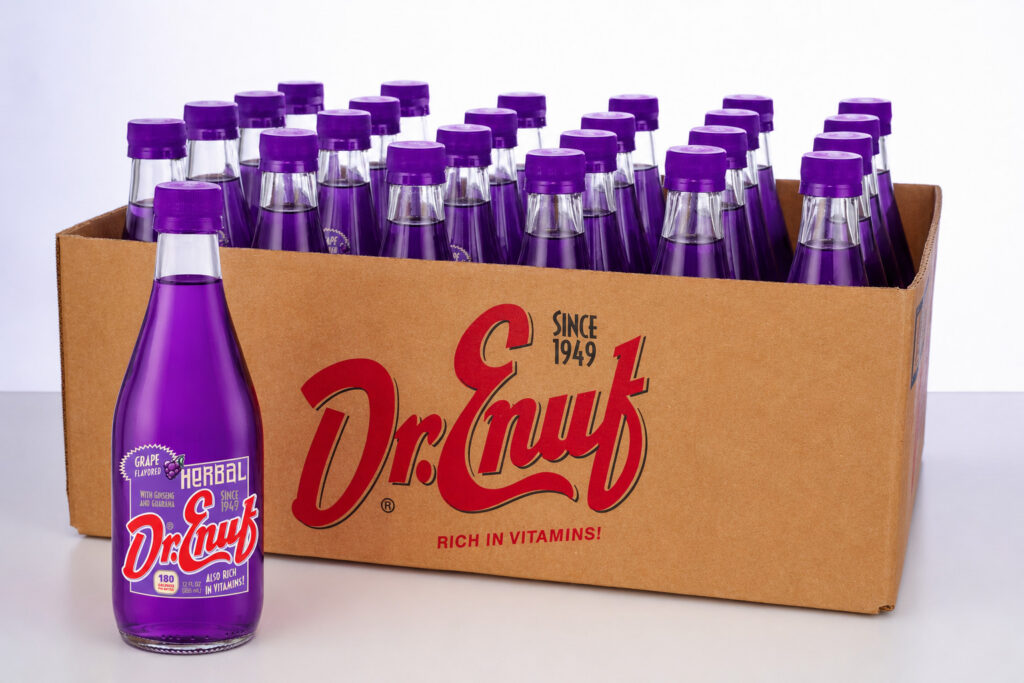
It’s funny how a seventy‑plus‑year‑old drink can suddenly find itself back in the spotlight, but that’s exactly what happened when Dr. Enuf rolled out its new grape flavor. One photo of that bright purple bottle hit social media, and before long it was everywhere, shared and reshared like folks had just discovered a long‑lost treasure. People have lined up to try it, stores have sold out, and for the last two weeks the whole region has been buzzing about a drink that’s been part of Appalachian life for generations. The excitement has made something clear. Dr. Enuf isn’t just surviving in the modern world. It’s still capable of surprising people.
Dr. Enuf has been part of life in the Appalachian hills for so long that it’s easy to forget it started far from here. Its story begins in 1949, when Chicago chemist William Mark Swartz set out to make a soft drink that did more than fizz and taste sweet. Folks around him complained about feeling run‑down, and Swartz believed a vitamin‑fortified drink might give people a little lift. He worked with B vitamins, added a lemon‑lime flavor, and ended up with something that didn’t taste quite like anything else on the market.
Swartz needed a bottler, so he placed an ad in a trade magazine. That ad found its way to Charles Gordon of Tri‑City Beverage in Johnson City, Tennessee. Gordon saw potential in the strange new drink and brought it south, where it found a home almost immediately. Production started that same year, and Dr. Enuf became one of the first vitamin‑enhanced soft drinks sold in the United States.
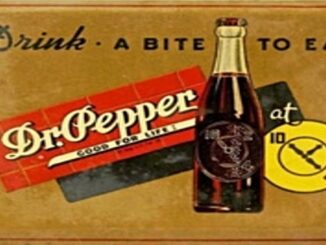
From the beginning, Dr. Enuf was marketed as a kind of tonic. Early ads promised relief from tiredness, stomach troubles, nerves, and even hangovers. Drugstores stacked it high, newspapers ran big ads, and the company leaned into the idea that this wasn’t just a soda. It was something you drank when you needed to feel better. A four‑pack cost more than other soft drinks, but people were willing to pay for the promise of a little extra pep.
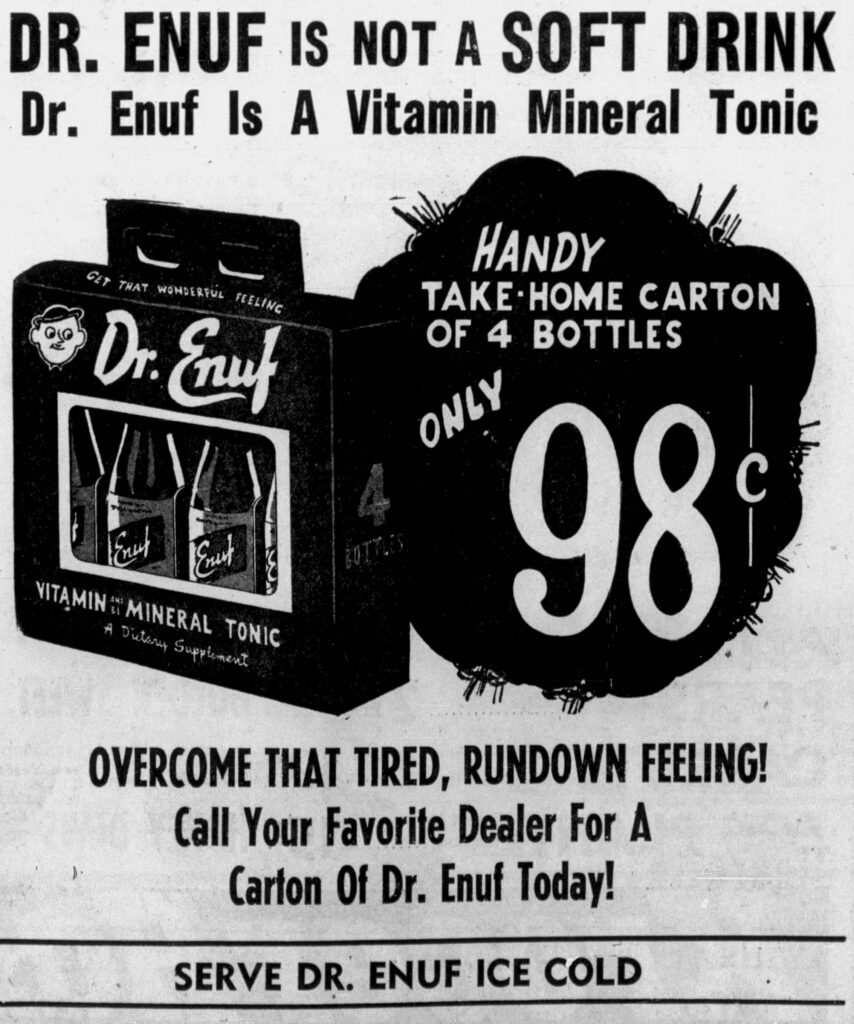
Tri‑City Beverage pushed hard to get the drink noticed. Bumper stickers appeared around town. A banner stretched across Main Street announcing that “The Dr. Has Arrived.” Demand grew so fast that the company had trouble keeping up. For a while, they even rationed supply because they couldn’t bottle it quickly enough.
The drink itself was simple: B vitamins, caffeine, cane sugar, and a lemon‑lime flavor that set it apart from colas and fruit sodas. Later versions added ingredients like ginseng and guarana, but the basic identity stayed the same. It was a bright, sharp drink with a reputation for waking you up and smoothing out whatever rough edges the day had given you.
Over the years, Dr. Enuf settled into the culture of northeast Tennessee and the surrounding region. You could find it in grocery stores, gas stations, and vending machines from Johnson City to the Virginia line. People swapped stories about how it helped their energy or eased a headache. Whether or not the drink truly worked miracles didn’t matter much. What mattered was that people believed in it, and belief can carry a product a long way.
Tri‑City Beverage bottled other drinks over the decades, including Mountain Dew in its early years, but Dr. Enuf remained the company’s signature creation. It kept its original slogan, “Enuf is Enough,” and held onto its loyal fan base even as national brands crowded the shelves.
Today, more than seventy years after it first arrived in Johnson City, Dr. Enuf is still being bottled by the same company. It comes in several varieties now, but the original green bottle remains the one people reach for when they want a taste of something familiar. It’s a regional icon, a little piece of Appalachian history you can hold in your hand.
And like many things that have lasted in these hills, Dr. Enuf didn’t survive because it was flashy or trendy. It survived because it became part of everyday life. A drink with a funny name, a sharp taste, and a promise that maybe, just maybe, it could help you feel a little better. Sometimes that’s all a community needs to keep something around for generations.
Discover more from Front Porch Philosophy
Subscribe to get the latest posts sent to your email.