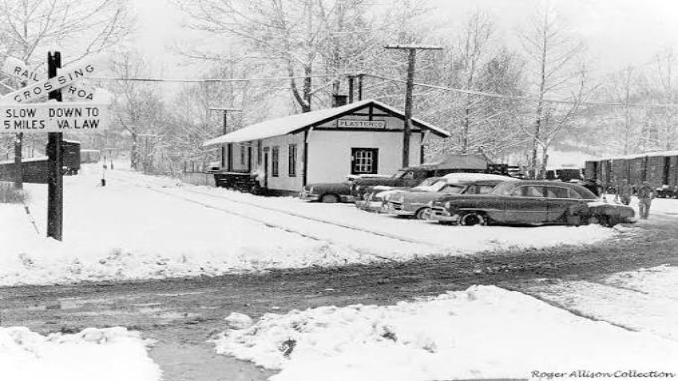
If you drive far enough down the backroads of Southwest Virginia, past the rolling pastureland and the quiet hollers where the mountains fold in on themselves, you’ll find a place called Plasterco. It is small enough that most maps barely bother with it, but for more than a century, Plasterco has carried a story much bigger than its footprint. It is one of those Appalachian company towns built on a single resource, a single industry, and a single promise that the earth beneath our feet still had something left to give.
Plasterco’s story begins with gypsum, a soft mineral that hides in pale veins underground. Folks were digging it out of the hills as early as 1815, back when it was mostly used as “land plaster” to sweeten the soil. Those early operations were small and simple, the kind of work done with hand tools and grit. But as the years rolled on, the demand grew, and the hills around Plasterco revealed just how much gypsum they were holding.
By the late 1800s, the easy‑to‑reach deposits were running thin, so the operation moved underground. A calcining plant was built to process the mineral, and the mine kept going deeper and deeper until Plasterco became home to what many called the deepest underground gypsum mine in the world. A thousand feet below the surface, men worked in the dim glow of lamps, carving out the mineral that kept the town alive.
Everything changed in 1909 when the United States Gypsum Company arrived. USG expanded the mill, modernized the operation, and eventually built a full gypsum wallboard plant in the 1920s. Plasterco became a true company town, the kind where the mine whistle set the rhythm of the day and the dust of the earth settled on every porch rail. Families built their lives around the shifts, the paydays, and the steady hum of industry. The mine was not just a workplace. It was the heartbeat of the community.
And like so many small industrial villages tucked into the mountains, Plasterco’s identity eventually began to fold into the nearest town. There was never any official vote or annexation. No paperwork. No ceremony. It just happened the way things often do in Appalachia, quietly and over time. As the mine slowed down and families moved or retired, Plasterco simply became understood as part of Saltville. The mail routes treated it that way. The schools and businesses were already centered there. Folks would say they lived “out Saltville way,” and Plasterco was included in that sweep of geography without anyone needing to explain it.
Today, Plasterco is quieter. The mine’s heyday has passed, and the town has settled into the slower rhythm that comes when industry moves on. But the history remains. The old structures, the stories passed down, the pride of a place that helped build homes and businesses across the country. Gypsum from Plasterco ended up in walls from coast to coast, meaning a little piece of Southwest Virginia is tucked into buildings most folks will never think twice about.
Plasterco is one of those places that reminds you how deeply Appalachia is tied to the land. Towns like this were carved out of mountains, built by hands that knew hard work, and sustained by minerals most people never see. They are quiet now, but they are not forgotten. They live on in memory, in family stories, and in the way the landscape still holds the shape of what once was.
If you ever find yourself driving through that corner of Virginia, slow down a little. Look at the hills. Think about the men who went a thousand feet underground so their families could stay above it. Think about the way a tiny place can leave a big mark. Plasterco may not be large, but its story is deep, layered, and worth remembering.
It is one more thread in the tapestry of Appalachian life, woven from earth, sweat, and the stubborn belief that even the smallest communities matter.
Discover more from Front Porch Philosophy
Subscribe to get the latest posts sent to your email.